A sweeping schedule that fits how you actually burn
The inspection happens every year no matter what. How often the brushes come out depends on your fires, and here's how to match the schedule to your habits.
- Family owned and run
- Free inspection first
- 100% satisfaction, guaranteed
- Locally owned and operated
Request a Free Inspection
Got it, thank you
Thanks for reaching out. We'll be in touch soon to book your free inspection.
Prefer the phone? Call (352) 675-6366
How often to sweep a chimney: start with an inspection
Annual professional attention provides a regular opportunity to assess the chimney, but cleaning needs depend on what is found. Ask whether the proposed visit includes cleaning, inspection or both, and what additional work would need separate authorization.
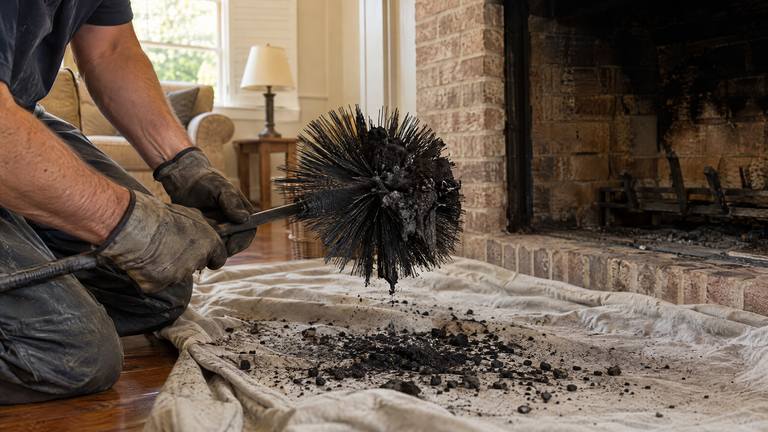
Notice what that says. The inspection is yearly. The cleaning happens when the inspection finds deposits worth removing. So how often should a chimney be cleaned in your house? That comes down to what the yearly look finds, and the finding follows how you use the fireplace.
Plan the annual appointment and follow the appliance's additional maintenance instructions. Cleaning may be needed more frequently or require separate scope or access. A clear finding at one visit does not justify ignoring new symptoms until the next year.
If you light a few fires a year
Occasional use does not automatically justify a two-year interval. A lightly used chimney can still have an obstruction, water damage or deposits from previous fires. Keep annual inspections and base cleaning on the findings and appliance instructions.
The inspection still happens every year, because things other than creosote can go wrong in a quiet chimney. Birds and squirrels move in, leaves pack onto the smoke shelf, caps rust and crowns crack, and a fireplace that isn't used much is the one nobody is watching.
If you only light a fire now and then, ask our pros to tell you at each inspection whether a sweep is due. There's no reason to pay for brushing a flue that doesn't need it.
Keep a simple note of how many fires you light each year and what wood you burned. It takes a minute, and it gives our pros a real picture of your use instead of a guess, so the advice you get fits your fireplace.
Weekend fires through the cool months
Weekend fires can produce very different amounts of buildup depending on fuel, operating conditions and venting. There is no fire-count rule that guarantees an annual sweep will be enough. Follow the inspection findings and shorten the maintenance interval when warranted.
Habits matter a lot at this level of use. Long evening fires that are left to smolder as they die down, damp wood from the bottom of the pile, and a damper opened only partway all speed up the buildup. Two households with the same number of fires can end up with very different flues.
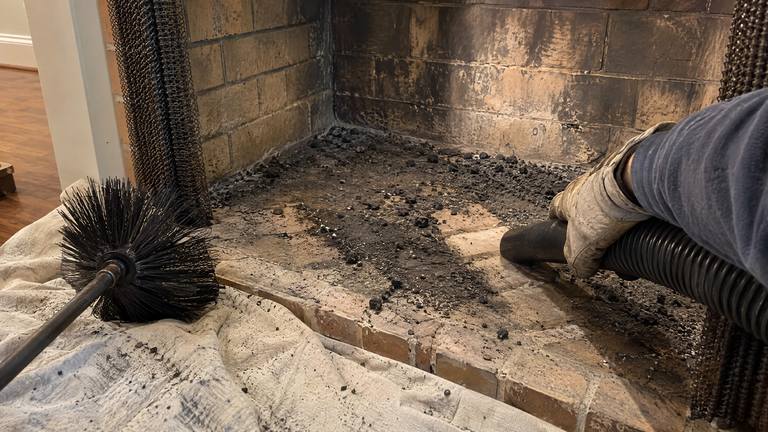
At that pace, take a flashlight to the damper halfway through the season. A crunchy, flaky layer building at the damper is your cue to book a sweep before the season ends.
An insert that runs all season
An insert used regularly for heating can accumulate deposits differently from an occasionally used open fireplace. Operate it with the fuel load and air settings in its manual; do not deliberately smolder a fire to stretch the fuel.
Plan on at least a yearly sweep, and follow the insert maker's manual, which may call for checking the liner and the connection more frequently during heavy use. Some owners who burn hard all season book a mid-season check as well, especially the first year with a new insert while they learn how it behaves.
An insert without a full-height liner deserves attention sooner, since the smoke then has to travel through a flue that's far larger than the insert's outlet, where it cools and condenses.
Gas fireplaces and gas logs
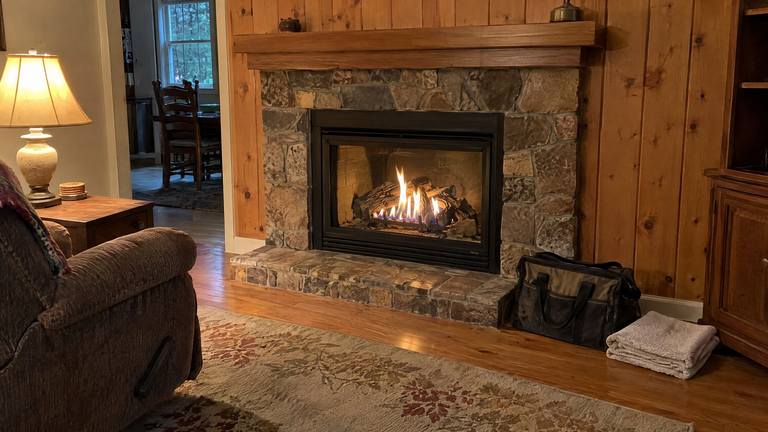
Gas burns without making creosote, so the question for a gas fireplace is service more than sweeping. Gas fireplace and log set manuals call for an inspection before use and at least once a year, covering the burner, the pilot, the vent and the log placement.
The vent still needs a look. Nests, leaves and debris can block a gas vent just as easily as a wood flue, and a flue that once served wood fires can still hold old creosote if nobody swept it before the gas logs went in. A vented log set in a masonry fireplace relies on that flue being clear.
So for gas, think yearly service by someone who knows gas units, plus a sweep of the flue when the inspection finds it needs one.
How often should a chimney be inspected if you don't use it?
A fireplace you don't light still has a chimney that faces every storm. Yearly checks catch water getting in through a cracked crown or rusted flashing, animals moving into an open flue, and damage that will be expensive by the time anyone wants a fire again.
If you've bought a home and nobody can say when the chimney last had an inspection, book one before the first fire. The same goes for a fireplace that has sat unused for several years. Ask for that look a few weeks before you plan to light a fire, so any repair it turns up has time to happen. A first look after a long gap is the one most likely to find something.
Signs you're due sooner than planned
A schedule is a starting point. Book a check sooner if you notice any of these.
- Smoke drifting into the room when it used to draw cleanly.
- A strong, sour smoky smell from the fireplace, especially on warm or damp days.
- Black flakes or crunchy bits falling onto the hearth or the smoke shelf.
- A damper that has become stiff, sticky or hard to open.
- Chirping, scratching or nest material, which means something moved in.
- Fires that are hard to start or keep going even with dry wood.
Put your chimney on a schedule
Want sweeps timed to how you really burn? Our locally owned pros inspect your chimney every year, sweep it when it needs it and tell you when it doesn't, with a written price each time. Your first service receives 10% off. Schedule a chimney sweep at (352) 675-6366.

Proudly American
Free inspections, 100% satisfaction guaranteed and a local family behind every job.
FAQs
A few more quick answers
Is once a year enough for a chimney sweep?
An annual inspection is a starting point, not a guarantee that one cleaning per year is enough. The appliance instructions and observed accumulation determine whether more frequent cleaning is needed.
What time of year is best for a sweep?
Any time the fireplace isn't in use works, and booking before the cool months keeps you ahead of the rush. A nest in the flue can shift the date.
Is sweeping part of gas fireplace upkeep?
It needs a yearly service by someone who knows gas units, and its vent needs checking for blockages. A flue that once burned wood should be swept before gas logs go in.
Can I skip a year if I didn't use the fireplace?
You can skip the sweep if the inspection finds the flue clean, but keep the yearly look, since animals and water don't wait for you to light a fire. Our pros can check it for you; call (352) 675-6366.
Chimney Guides
Guides from our local pros
-
-
-


Our Services
Have our pros take care of it


Ready for a free look from our pros?
Tell a local pro what you're seeing, and we'll find a free inspection slot that suits your schedule.
Get a Free InspectionCall the Gainesville chimney experts
(352) 675-6366Inspection at no charge, price in writing before any work