The black crust in your flue, and how your fires make it
Wood smoke can leave combustible deposits in different forms. Learn what those observations can tell you and why cleaning and assessment need to suit the actual system.
- Family owned and run
- Free inspection first
- 100% satisfaction, guaranteed
- Locally owned and operated
Request a Free Inspection
Got it, thank you
Thanks for reaching out. We'll be in touch soon to book your free inspection.
Prefer the phone? Call (352) 675-6366
Where your own fires make it
Smoke looks like one thing, but it's a mix. There's water vapor from the wood, gases that didn't finish burning, and fine particles of carbon and tar. While the smoke is hot, all of that stays airborne and rides the draft up the flue.
The flue walls are cooler than the smoke, and the higher the smoke climbs, the cooler it gets. When it cools enough, the vapor and tars condense on the flue walls the way steam beads on a cold glass. What sticks and stays is creosote.
That's why two fireplaces burning the same number of fires can end the season with very different flues. The one with cooler smoke, from damp wood, a smoldering fire or a flue that runs cold, collects far more.
Creosote stages you can spot with a flashlight
You may notice deposits from a safe, accessible position when the fireplace is fully cold. Do not reach past the damper or scrape material to classify it. What is visible at the opening may not represent the rest of the flue; leave assessment and removal to appropriate service work.
- Loose, flaky deposits may be visible near an accessible opening, but appearance there does not establish the condition farther up the flue.
- Crusty deposits can adhere more firmly. The cleaning method must suit the actual accumulation and liner rather than a generic brush recommendation.
- Hard, glazed deposits need professional assessment and an appropriate removal plan. Do not try to burn, scrape or chemically treat them yourself.
Why every stage deserves attention
Combustible deposits require attention regardless of their appearance. Color and texture do not establish the amount higher in the chimney or whether it is safe to burn another fire. Cleaning needs depend on the actual accumulation, appliance and condition of the venting.
Hard, glazed deposits can be difficult to remove and need an appropriate treatment plan. Do not try to burn them out. A professional should assess the liner and deposits before selecting a compatible method and deciding whether further work is needed.
Creosote also carries a strong, sour smell that can drift into the room on warm, damp days, especially when the house is closed up. For plenty of people, that smell is the first clue, long before anyone looks up the flue.
Habits that build it up fast
Some everyday habits make creosote build much faster than it needs to. Burning wood that isn't fully dry is the big one. Water in the wood cools the fire and adds steam to the smoke, and both put more deposit on the flue walls.
Smoldering fires do the same. Turning the air way down to make a fire last all evening, or shutting the damper partway, slows the smoke and lets it cool before it gets out. Heaping on a big load of logs at once can smother the flames into a slow, smoky burn.
The appliance and venting arrangement can also affect combustion and deposit formation. A liner change is only one possible response and requires a suitable design for the equipment. It is not a general cure for damp fuel or incorrect operating habits.
Habits that make less of it
The good news is that the fixes are simple. Burn only dry, split, seasoned wood. Build a fire that burns briskly with visible flames, and add a few pieces at a time instead of piling it high.
Open the damper all the way before you light, and leave it open until the last ember is out and the ashes are cold. If your fireplace has glass doors, follow the maker's guidance on whether they stay open or closed with a wood fire.
Use the appliance's starting procedure with approved dry fuel. Do not hold burning paper near the damper to force a draft. If smoke enters the room, stop use and have the problem assessed instead of adding heat or fuel to overcome it.
Creosote buildup and how a sweep removes it
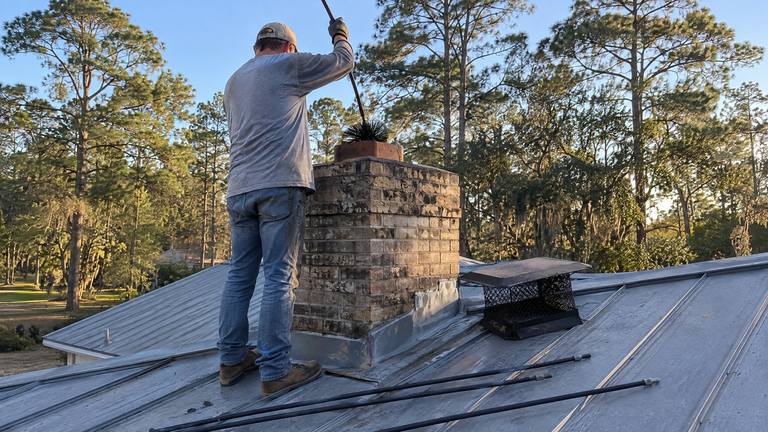
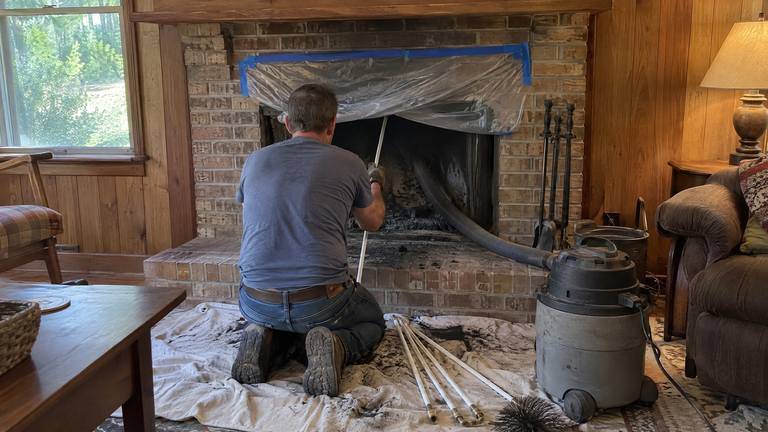
Cleaning methods should suit the liner material, appliance and type of deposit. Access may be from above, below or through designated service openings. Ask what areas the proposed work includes and how the room will be protected; no single brush or access method suits every installation.
Stubborn deposits may require a different method, additional access or more than one appointment. The choice depends on the deposit and the approved cleaning instructions, not simply a stage number. Have any additional scope and cost explained before authorizing it.
Removing deposits can expose previously obscured surfaces, but cleaning does not make every concealed area visible. The findings should distinguish observed conditions from parts that still require additional access or evaluation.
Creosote in chimney liners behind inserts
With a wood-burning insert, the venting arrangement changes the picture. Inserts burn efficiently, but their smaller exhaust can run cooler through a tall chimney, and creosote can build quickly in the liner if the insert is run slow and low for long stretches.
Insert liners are swept with brushes made for metal liners, and the insert's own manual sets out how and when the connection and liner get cleaned. If your insert has no full-height liner at all, that's worth raising at your next visit.
Have our pros check your flue
Crunchy or glossy deposits are worth assessing before further use. Our local team offers a free inspection and a written estimate for the recommended work. Your first service receives 10% off, with a 100% satisfaction guarantee. Discuss a chimney sweep at (352) 675-6366.

Proudly American
Free inspections, 100% satisfaction guaranteed and a local family behind every job.
FAQs
More answers from our pros
Is it safe to scrape creosote myself?
Do not scrape deposits or reach into the flue to identify them. A small accessible area does not show the whole chimney's condition. Arrange an assessment and cleaning with methods appropriate for the appliance and liner.
Is that sour, smoky odor creosote?
Creosote can contribute to a smoky odor, but moisture, airflow and other conditions may also be involved. Cleaning or a compatible damper may be considered after assessment. A damper change must be suitable for the appliance, especially where gas equipment is installed.
Can creosote build up in a gas fireplace?
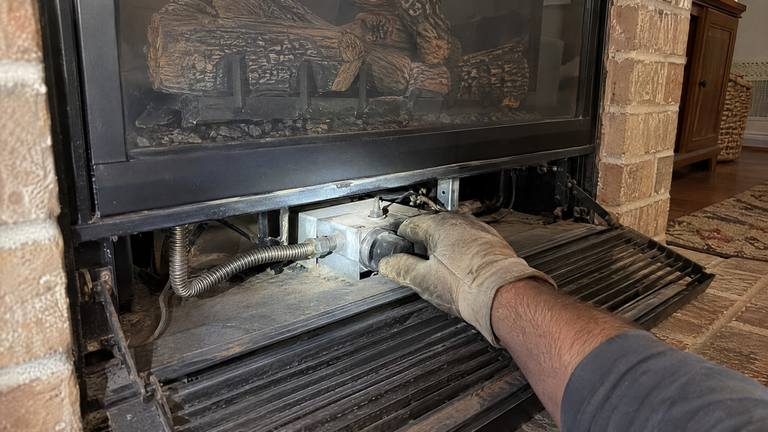
Gas burns cleanly and doesn't make creosote the way wood does. A flue that used to serve a wood fireplace should be swept before a gas appliance goes in, since old creosote stays behind.
How quickly does glaze form?
Deposit formation varies with fuel, operation and venting conditions. Appearance alone does not show how long it took to form. Leave a chimney with suspected heavy deposits unused until the appropriate cleaning and condition assessment have been arranged. Call (352) 675-6366.
Chimney Guides
Worth a read before you call
-
-
-


Our Services
Have our pros take care of it


Claim your 10% discount today
One call to (352) 675-6366 puts a free inspection from our local, family-run pros on your calendar.
Get a Free InspectionCall the Gainesville chimney experts
(352) 675-6366Inspection at no charge, price in writing before any work