

Need a chimney rebuild in Gainesville? Ask local pros
A leaning or crumbling chimney rebuilt from firm brick by family-owned local pros, starting with a no-cost inspection.
- Family owned and run
- Free inspection first
- 100% satisfaction, guaranteed
- Locally owned and operated
Request a Free Inspection
Got it, thank you
Thanks for reaching out. We'll be in touch soon to book your free inspection.
Prefer the phone? Call (352) 675-6366
What's Included
Chimney reconstruction from solid brick up
How much of your chimney has to come down? That's the first question on any rebuild, and our local, family-run pros answer it during a free visit. Some chimneys only need the part above the roofline relaid, while a leaning or cracked-through chimney may need rebuilding from lower down. Either way you get brick matched to the old, plus a new crown, cap and flashing.
- Partial chimney rebuild above the roofline
- Full chimney rebuild when damage runs below the roof
- Leaning chimney repair by relaying from solid masonry
- New crown, cap and flashing on every rebuild
- New brick and mortar that blend with your house
- Flue tile or a listed liner set as the walls rise
Photos
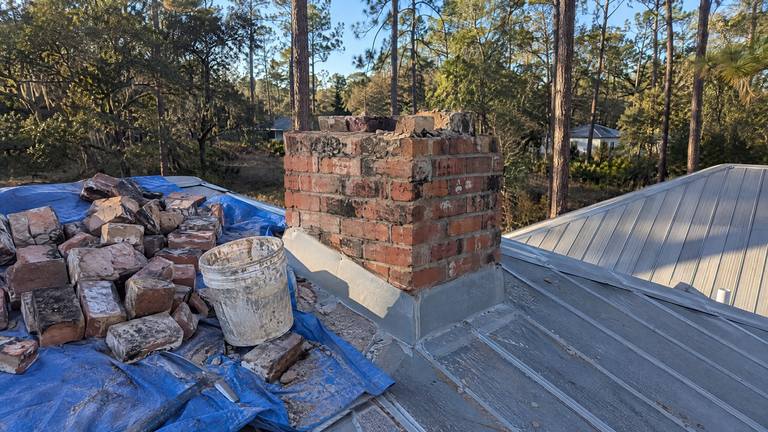
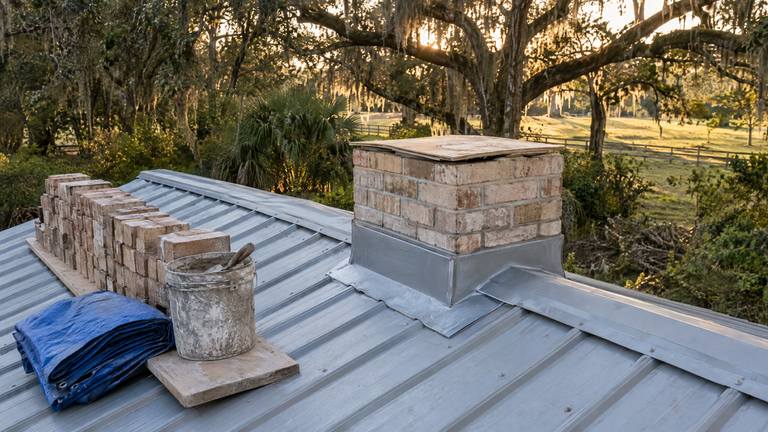
Chimneys taken down and relaid


Our Process
How much comes down, and how it goes back up
-
Find the solid masonry
Our pro checks where brick and mortar are still sound, and that line sets how far down the rebuild goes.
-
Take it down by hand
Brick is removed down to the solid line, with the roof and yard protected and the debris hauled away.
-
Relay to the code
New walls go up in solid masonry at least 4 inches thick with matched mortar, and the flue lining rises with them.
-
Crown, cap and flashing
A sloped, drip-edged crown, a cap and fresh flashing tie the rebuilt chimney back into the roof.
Your Options
Partial or full, and where the line falls
How far down the damage reaches sets the size of the rebuild. These are the cases our pros sort chimneys into.
Materials
Brick, mortar and liners that go into a rebuild
- Matched brick
- New or salvaged brick picked for size, color and texture so the rebuilt part blends with the house.
- The right mortar type
- A type chosen per BIA Technical Note 8B, with joints tooled concave or V-shaped, which Technical Note 7B rates best at shedding water.
- Clay flue liners
- Bedded in medium-duty refractory mortar (ASTM C199) and supported on all sides, as FBC R1003.12 requires.
- Crown, cap and flashing
- A crown pitched to a drip edge (R1003.9.1), a fresh cap, and new step and counterflashing at the roof.
Cost Factors
What shapes the price of chimney rebuilding
How far down it goes
Rebuilding from the roofline up is a smaller job than rebuilding from the attic floor or the ground.
Width and flue count
Extra width and a second or third flue add brick, lining and labor.
Tracking down matching brick
Salvaged or special-order brick costs more and can take time to track down.
What the building department asks
Where the building department wants a permit, its fees and inspection visits become part of the job.
Claim 10% off your first service
Book your rebuild today and claim 10% off, since it's the first job our pros do for you.
Free Inspection
Measured and checked before any brick comes down
- Whether to rebuild the chimney above the roofline or lower down
- Any lean, crack or movement, and the base below it
- Flue tile or liner condition inside
- Chimney height against the code's roof clearances
- Which of the crown, cap and flashing are due for replacement
- Color of the brick and mortar, for matching
- Permit needs, and a price for each stage
Why Choose Us
A chimney rebuild contractor that plans before tearing down
- Locally owned and run
- A family-run company
- 100% satisfaction guarantee
- Your inspection is free
- Same-day visits available
- Arrange a visit, take 10% off
A rebuild should also fix the reason the chimney failed. Our pros take it down to masonry that's genuinely solid, relay it to FBC Residential R1003 with the right mortar and a proper flue lining, and finish with a crown, cap and flashing tie-in built to shed water. You'll see the price in writing before you say yes, and the first inspection is free. Reach our pros at (352) 675-6366.
- Your written price is freeThe rebuild is priced in a free written estimate that breaks out each stage.
- Family owned and runFamily run, so a multi-day rebuild gets planned around your household.
- Our workmanship warrantyThe rebuilt masonry, crown, cap and flashing all come with a workmanship warranty.
Local Conditions
Rebuild planning around Gainesville
Florida's building code treats rebuilding a chimney as permitted work under FBC Building section 105.1. The building department that covers your address, in Alachua, Union, Bradford, Levy or Gilchrist County, decides what it needs, and your estimate names who applies for the permit.
A rebuild runs several working days, so our pros cover the open chimney at the end of each one and set the schedule with you before any brick is removed, including where materials will sit. Old brick and debris leave with us as the work goes.
FAQs
Planning a rebuild? Ask us these first
When could a rebuild start, and how long does it run?
Work is scheduled once you approve the price and any permit is in hand. Relaying the top section takes a few working days, and larger rebuilds take longer, with the schedule set out in your estimate.
Is the rebuild estimate free and itemized?
Yes. It's free and written, with teardown, masonry, lining, crown, cap and flashing each shown, so you can see where every part of the cost comes from.
Can you rebuild a chimney in Micanopy or Cross Creek?
Yes. Micanopy and Cross Creek are both in Alachua County, which our pros cover end to end. Your free inspection is a call away at (352) 675-6366.
Does a rebuild come with a fresh crown and flashing too?
Yes. Once the chimney is relaid, it gets a sloped crown with a drip edge, a cap and flashing worked into the roof, since the old pieces won't fit a rebuilt top.
Is there a way to straighten a leaning chimney without rebuilding?
Not with brick and mortar. A lean means the chimney has moved at its base or broken along its height, and the fix is taking it down to where it's sound and relaying it. Reserve your free look, and our pros will show you where that point is.
Common Problems
When patching stops paying off
-
The whole chimney has a visible tilt
It has moved at the base or broken along its height. It's taken down to sound masonry and relaid plumb.
-
Bricks falling onto the roof
The upper section has lost its bond. Relaying the part above the roofline replaces it.
-
Cracks splitting whole bricks
Something is stressing the whole chimney. Our pros find the cause before deciding how much to rebuild.
-
Patch on top of patch
Years of repairs aren't holding. Relaying the failed part can cost less over time than chasing new cracks.
-
Soft, sandy mortar all the way down
The joints have failed throughout. A rebuild of the worst part, with repointing below, may be the answer.
Get in Touch
Set up your free inspection
Send a few details and we'll call you back to set up a visit.
- Free inspection first
- 100% satisfaction, guaranteed
- No hidden fees, all upfront
Got it, thank you
Thanks for reaching out. We'll be in touch soon to book your free inspection.
Our Services
Smaller repairs that might do the job


Chimney Guides
Guides from our local pros
-
-


Full service details
How much has to come down
Every rebuild starts by finding the line where the masonry turns solid again. Above that line, brick is loose, joints are sand, or cracks run through the units. Below it, the chimney can carry new work. When that line sits close to the roof, only the exposed part gets relaid.
Leaning, or cracked through its full height? That's a different story. That points to movement lower down, sometimes at the footing, and FBC Residential R1003.2 calls for a footing a foot thick that sticks out 6 inches past the chimney all around. Our pros check how deep the problem goes before pricing anything.
Relaying the walls and the flue
Rebuilt masonry and its lining need to suit the approved design. The proposal should explain the wall construction, liner support and joints. Where more than one flue is present, the required separation and any applicable exception must be checked for the actual arrangement.
The rebuild must preserve the required separation from combustible framing and provide the appropriate fireblocking at penetrations. These details depend on the construction and applicable requirements, so they are established before the surrounding area is closed.
Making the new part look like it belongs
A rebuilt chimney should look like it belongs. Our pros pick brick that matches in size, color and surface, salvaging sound brick from the teardown where it's worth reusing. The mortar follows BIA Technical Note 8B, which favors the softest type that will still carry the load, and joints are tooled concave or into a V, the profiles Technical Note 7B credits with the best resistance to water.
Just the top, above the roofline
If the brick below the roof is solid and the chimney stands straight, rebuilding just the exposed part is the practical choice. That section still has to meet the code. R1003.9 sets its minimum height two ways, a 3-foot rise over the roof penetration and a 2-foot lead over any part of the house within 10 feet sideways, and R1003.9.1 wants its crown pitched, edged with a drip and jointed flexibly at the flue.
New flashing reconnects the chimney and roof. The chimney's width and position also affect whether a cricket is needed. Any proposed cricket or roofing work should be described in the estimate, including who will carry out that part.
Keeping the house clean while brick comes down
A rebuild moves a lot of brick. Our pros protect the roof around the chimney, keep debris off the shingles and out of the gutters, and haul it away as the work goes. At the end of each day the open top is covered so rain can't get into the chimney or the attic.
Inside, the fireplace opening is sealed while work goes on above it, so dust stays in the chimney and out of the room.
Reserve a rebuild estimate, free of charge
A local pro finds where your chimney is still sound and prices the rebuild from there. Start with a call to (352) 675-6366.
Get a Free InspectionCall the Gainesville chimney experts
(352) 675-6366Inspection at no charge, price in writing before any work