Your fireplace, your CO alarm, and the first step if it sounds
Carbon monoxide has no color and no smell. Here's how a wood fire or a gas unit can send it into the house, where alarms belong, and what keeps the risk low.
- Family owned and run
- Free inspection first
- 100% satisfaction, guaranteed
- Locally owned and operated
Request a Free Inspection
Got it, thank you
Thanks for reaching out. We'll be in touch soon to book your free inspection.
Prefer the phone? Call (352) 675-6366
If the alarm is going off right now
Don't stop to look for the cause. Get everyone out of the house into fresh air, pets too, and call 911 from outside. Carbon monoxide can build up to dangerous levels without any smell or smoke, and the alarm is telling you it already has.
The Consumer Product Safety Commission's list of early carbon monoxide symptoms reads like the flu: headaches, feeling dizzy or weak, an upset stomach or vomiting, drowsiness and confusion. If several people in the house feel that way at once, especially when the fireplace or a gas appliance is running, treat it as carbon monoxide.
Stay outside until the fire department or the gas utility says it's safe to go back in. Once they've found the source, the next step is making sure it can't happen again.
How a wood fire makes carbon monoxide
Every fire makes some carbon monoxide. A fire burning briskly with plenty of air makes less, and a working chimney carries what it makes up and out of the house. Trouble starts when either half of that breaks down.
A smoldering fire, damp wood or a damper that's only partly open all mean more carbon monoxide in the smoke. A flue that's blocked by a nest, leaves, fallen tile or heavy creosote keeps that smoke from leaving. And shutting the damper over a bed of live coals, to hold in the warmth, leaves the gas one way to go, into the room.
Pressure differences between rooms and outdoors can affect how a fireplace vents. Have the appliance and combustion-air arrangements assessed when smoke or draft problems occur. Opening a window or changing fan use does not by itself establish safe operation.
Gas fireplace carbon monoxide
Gas burns cleanly when it's in adjustment, but a gas unit can still produce carbon monoxide when something is off. A vented gas log set in a masonry fireplace needs the damper held open whenever it's in use. Log set makers call for the damper to be fixed open, and a damper clamp keeps it from swinging shut. Vented-log instructions may also require a minimum opening at all times, maintained by a permanent stop; operating the unit can require the damper fully open.
Direct-vent gas fireplaces and inserts are sealed from the room, drawing air from outside and sending exhaust back out, so a damaged vent or a loose connection is the main concern. Vent-free units burn in the room itself and carry an oxygen depletion sensor, plus room-size and bedroom limits in the fuel gas code and the unit's listing.
Watch for soot on the glass or logs. Watch for flames that turn tall, lazy and yellow where they used to be steady, and for a pilot that won't stay lit. Each one calls for a service visit before the next use.
Where a carbon monoxide detector near the fireplace belongs
Place CO alarms on each level and outside sleeping areas as recommended by CPSC, following each alarm's installation instructions. Applicable building requirements may add obligations for a particular home. Alarms provide a warning; they do not prevent a faulty appliance from producing CO.
Whatever your home's age, the CPSC recommends alarms on every level of the house and outside each sleeping area. Many people also want a carbon monoxide detector near the fireplace itself. That's fine, as long as you follow the alarm maker's placement instructions. Some alarms shouldn't sit right beside a fuel-burning appliance, where brief puffs at startup can set them off.
Combination smoke and CO alarms save wall space, and interconnected alarms sound everywhere at once, which helps in a larger house.
Testing and replacing your alarms
The U.S. Fire Administration and NFPA recommend testing CO alarms at least once a month, using the test button. Replace batteries on the schedule the maker gives, and replace the whole alarm when it reaches the end of the service life printed on it. Many newer alarms chirp or display a warning when that date arrives.
A quick monthly routine works well: press the test button on each smoke and CO alarm, listen for all of them, and check the date on the back once a year. Put the test on the same day each month, like the first weekend, so it becomes a habit instead of a chore.
Fireplace carbon monoxide risks you can lower
Habit and upkeep do the heavy lifting in keeping fireplace carbon monoxide in check.
- Open the damper fully before lighting a wood fire, and leave it open until the ashes are cold.
- Burn dry, seasoned wood in a brisk fire, and avoid long, smoldering burns.
- Keep the flue swept and inspected every year, so nests, debris and creosote don't narrow it.
- Have gas units serviced yearly as their manuals direct, and don't use a gas unit with sooty glass or yellow, lazy flames.
- Have room-pressure or combustion-air concerns assessed before further fireplace use. An open window is not a substitute for resolving a venting problem.
What our inspection checks with CO in mind
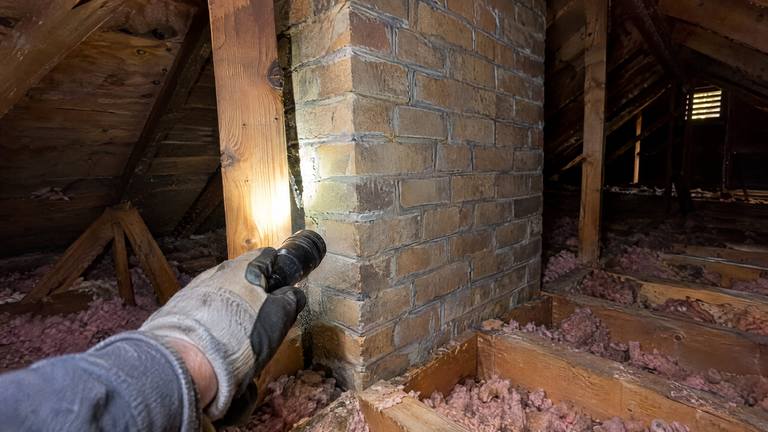
When our pros inspect a fireplace, the path the exhaust takes is part of the job. That means the cap and top of the flue, anything blocking the passage, the condition of the liner, the damper's operation and the smoke chamber. A cracked liner can let exhaust leak into the house through gaps in the masonry, so its condition matters for more than fire safety.
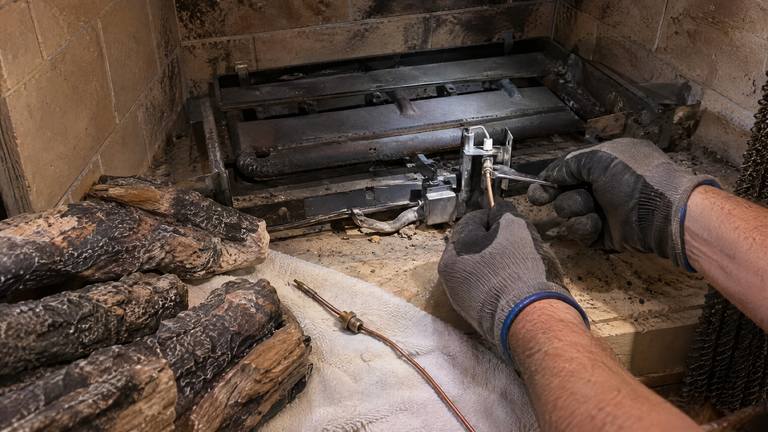
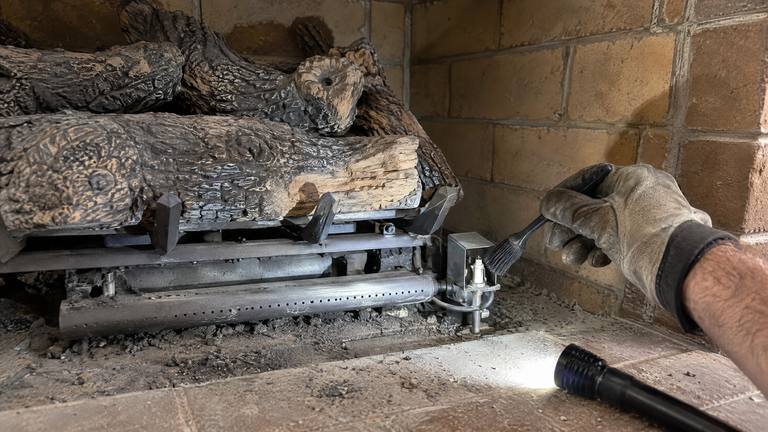
On gas units, our specialists check the venting and its connections, the burner and the pilot against the unit's manual, and look for the soot patterns that point to poor combustion.
Keep the exhaust going where it belongs
Our family-run team offers free inspections and written estimates for recommended work. Discuss accessible flue, damper and venting checks, along with any further evaluation needed. An inspection does not guarantee safe operation under every condition. First service receives 10% off. Arrange chimney inspection at (352) 675-6366.

Proudly American
Proud to be a local, family-run company, and proud of every chimney and fireplace our pros look after.
FAQs
More answers from our pros
Does a wood fire make carbon monoxide too?
Yes. Any fire makes some, and a smoldering fire, a partly closed damper or a blocked flue can let it into the room. A clear, drafting flue and a brisk fire keep it moving up and out.
Do I need a CO alarm if my fireplace is electric?
An electric fireplace doesn't burn fuel, so it doesn't make carbon monoxide. Your home may still need alarms for other fuel-burning appliances or an attached garage.
Is it safe to sleep with embers in the fireplace?
Do not go to sleep while an open wood fire remains unattended. Plan time for it to go out, follow the fireplace's shutdown instructions and keep the damper open while combustion or embers could still produce gases. Working alarms do not replace attendance.
Can you check my gas fireplace vent for problems?
Yes. Our specialists inspect the venting, the connections and the burner against the unit's manual and explain anything that needs attention. Put a visit on the calendar at (352) 675-6366.
Chimney Guides
Worth a read before you call
-
-
-


Claim your 10% discount today
Our local specialists take a free look and lay out your options clearly before any price is set.
Get a Free InspectionCall the Gainesville chimney experts
(352) 675-6366Inspection at no charge, price in writing before any work