The chimney check first, then logs, an insert or a new unit
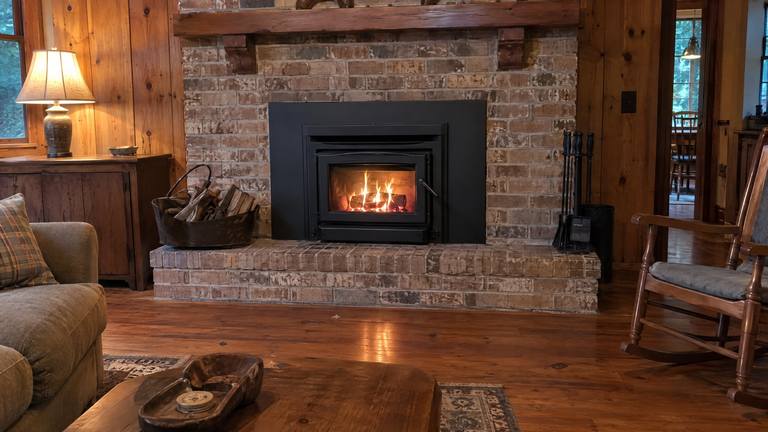
Going from wood to gas can mean a simple set of gas logs or a sealed insert that heats the room. Each route asks something different of your chimney, and each has its own look.
- Family owned and run
- Free inspection first
- 100% satisfaction, guaranteed
- Locally owned and operated
Request a Free Inspection
Got it, thank you
Thanks for reaching out. We'll be in touch soon to book your free inspection.
Prefer the phone? Call (352) 675-6366
Why the chimney gets checked first
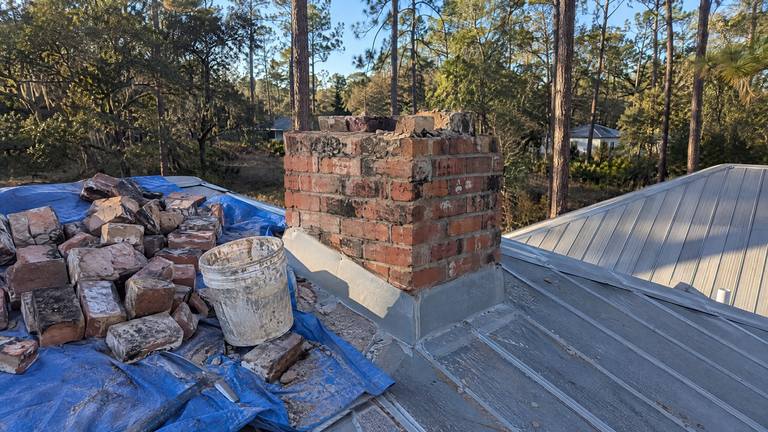
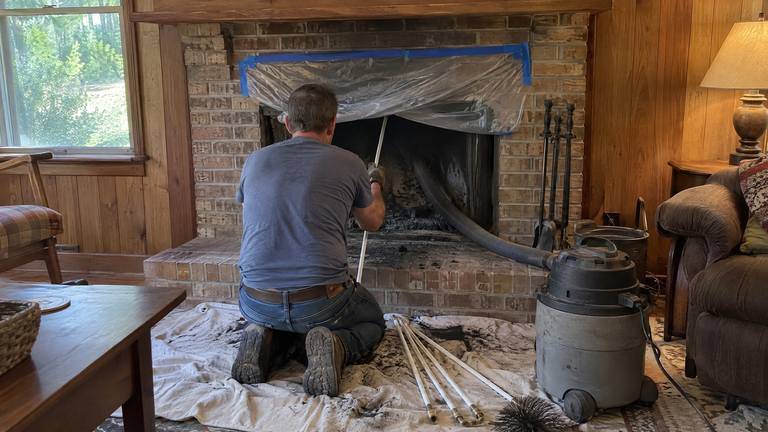
An existing wood-burning fireplace needs assessment before a gas conversion. Deposits and damage do not disappear when the fuel changes. A vented log set requires the fireplace and flue preparation specified by its manufacturer, with any necessary repairs addressed before operation.
The proposed gas appliance determines the required chimney preparation and connection. Vented logs rely on a suitable existing fireplace and flue, while an insert needs its approved venting arrangement. Assessment should identify damage and any necessary cleaning or repairs before installation, including the selected log set's permanent and operating damper openings.
The check also answers a practical question: does the fireplace have room for what you want to put in it? Our pros measure the opening, the depth and the damper area so the log set or insert you pick actually fits. The log-set manual governs both the operating position and any permanent damper opening; an installed safety clamp must remain effective.
Route one, a vented gas log set
A vented gas log set is the simplest conversion. Ceramic logs sit on a burner in your existing firebox, and the exhaust goes up the chimney you already have. Log sets are tested to ANSI Z21.60 as decorative appliances for solid-fuel fireplaces.
Because they vent through an open flue, the damper has to stay open whenever the logs are in use. Many sets come with a damper clamp that holds it open. The flames are tall, yellow and lively, the closest gas gets to the look of a wood fire. Do not treat a vented-log damper like a wood-fire damper: the log appliance may require an opening maintained at all times as well as full opening during use.
The trade-off is heat. With the damper open, much of the warmth goes up the chimney, so a vented log set is about ambiance more than heating. It suits a fireplace that's lit on cool evenings for the look of it. A fitted damper clamp is part of the vented-log installation. Preserve the required permanent opening and follow the manual when operating the burner.
Log sets come in many styles, from rough split oak to smooth birch and contemporary stones or glass. The burner and the log pattern are designed together, so the logs go back exactly where the manual shows after any cleaning, or the flames won't burn the way they were tested.
Route two, vent-free gas logs
Vent-free logs discharge combustion products indoors and have specific limits on their location, combustion air and use. Damper position comes from the selected model's instructions. Their oxygen depletion system does not replace CO alarms or establish suitability for a particular room.
They aren't allowed everywhere, and some rooms are too small for them. If you're considering vent-free logs, our specialists check the room's size against the fuel gas code and the manual before recommending them, and they'll tell you if a vented option suits the space better.
Route three, a direct-vent gas insert
Converting with a direct-vent insert places a gas appliance in a suitable existing fireplace and uses approved paths for outdoor air and exhaust. Its glass, venting and connections form part of a specified system. Physical fit is only one part of checking compatibility.
The insert needs the manufacturer-approved combustion-air and exhaust arrangement for that model. The existing fireplace, chimney and route must be suitable. Liner lengths, terminations and closure details should come from the actual instructions, not a generic conversion recipe.
Next to a log set, an insert is the bigger job, since it needs its own liner kit and a trim surround, but it's the route that turns a drafty fireplace into a real heat source.
Gas logs vs gas insert for your evenings
Weighing the two main routes? These differences tend to settle it.
- Look: logs give an open fire with tall yellow flames; an insert frames the fire behind glass.
- Heat: vented decorative logs prioritize an open-fire appearance; heating performance and room suitability depend on the selected appliance.
- Chimney: logs use the existing flue as it is, once cleaned and checked; an insert gets its own liners.
- Damper: vented logs can require a permanent minimum opening and a fully open damper during use. An insert follows its own approved venting and closure details.
- Controls: log sets range from a manual valve to a remote; inserts can add a remote and a thermostat.
Route four, a new gas fireplace
Sometimes converting the old fireplace isn't the best path. If the chimney would need extensive repair, the fireplace is in the wrong spot, or you want a style the old opening can't hold, a new direct-vent gas fireplace may make more sense.
A new gas fireplace may use a different vent route, but the old chimney cannot simply be ignored if it is damaged or unstable. The project should address retained structure and moisture paths, and define any decommissioning work for unused components.
The gas line, and who runs it
Every route needs gas at the fireplace, and running that line is a gas contractor's job. The line comes from your meter or, for propane, from a tank, and it ends at a shutoff valve near the appliance. Your quote says who runs it.
Gas type matters too. Log sets, inserts and fireplaces are built for either natural gas or propane, and the rating plate says which. Some units can't be converted in the field from one to the other, so the unit is ordered for the gas you have.
A conversion involving a new gas line or appliance will likely need a permit, which the building official for your address decides.
Plan your wood to gas fireplace conversion
Ready to trade ashes for a switch? A local, family-owned company, we check your chimney for free, sweep it if it needs it, walk you through log sets and inserts that fit your fireplace and put each price in writing. Your first service receives 10% off. Ask about gas log installation at (352) 675-6366.

Proudly American
Free inspections, 100% satisfaction guaranteed and a local family behind every job.
FAQs
More answers from our pros
Will gas logs fit my wood fireplace?
A sound masonry fireplace with a working chimney can take a vented log set once the flue is cleaned and checked. A factory-built wood fireplace can only take a log set its maker lists for it.
Do gas logs need the damper open? For a vented log set, check the required minimum opening that remains when the unit is off, in addition to the damper position while it burns.
Vented gas logs require the damper arrangement in their exact manual, commonly a permanent minimum opening plus a fully open damper during operation. Do not remove a fitted safety stop. Vent-free products have different restrictions and require their own suitability assessment.
Will a gas insert heat my living room?
A direct-vent insert is built to heat, and many run on a thermostat. How well it heats depends on its size relative to the room, which our specialists help you match.
Is a conversion done in one visit?
Timing depends on the existing condition, appliance, gas supply, venting, approvals and finishes. A single short visit cannot be promised before the scope is known. Arrange a planning discussion at (352) 675-6366.
Chimney Guides
Worth a read before you call
-
-
-


Ask our pros about your fireplace
Our local specialists take a free look and lay out your options clearly before any price is set.
Get a Free InspectionCall the Gainesville chimney experts
(352) 675-6366Inspection at no charge, price in writing before any work