The parts of a sweep you can do, and the parts you can't
Some chimney upkeep is easy homeowner work. Some takes a roof, the right rods and a trained eye. Here's where the line sits and why a DIY sweep still leaves the yearly check undone.
- Family owned and run
- Free inspection first
- 100% satisfaction, guaranteed
- Locally owned and operated
Request a Free Inspection
Got it, thank you
Thanks for reaching out. We'll be in touch soon to book your free inspection.
Prefer the phone? Call (352) 675-6366
What you can safely do from the firebox
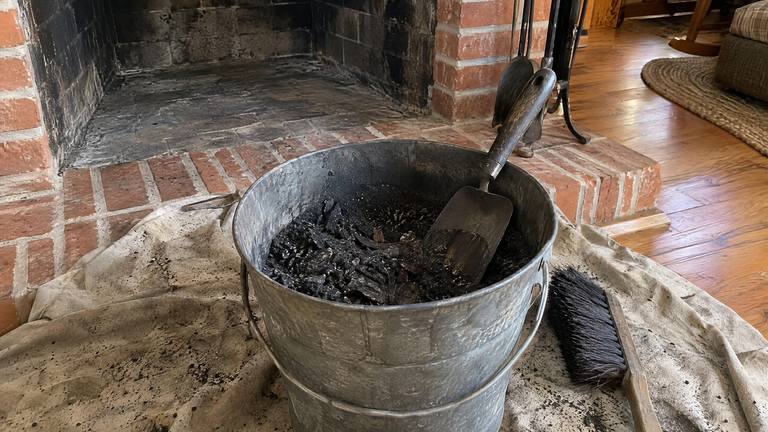
Follow the fireplace manual for routine owner care. Remove ashes only after they are completely cold; an elapsed day does not prove that no ember remains. Use a suitable lidded metal container and keep it outdoors on a noncombustible surface away from the house and combustibles.
Owner cleaning should not extend into inaccessible flue sections. Use only equipment and methods permitted by the fireplace instructions, and never a household vacuum for suspect hot ashes. Unexpected deposits, nest material or broken pieces are reasons to stop and arrange assessment.
With the fireplace fully cold, check owner-accessible damper controls only as its instructions allow. A stuck or uncertain damper needs attention before lighting. Test smoke and CO alarms and maintain their batteries according to the alarm instructions.
DIY chimney cleaning from below
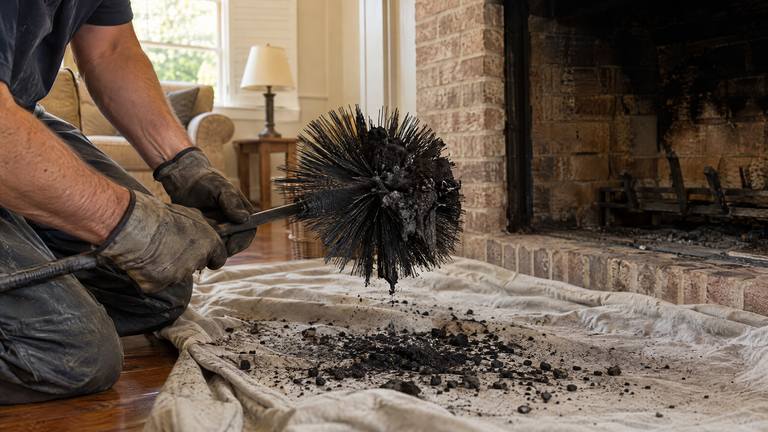
The brush and cleaning method must match the actual liner and its manufacturer's instructions. Metal and masonry systems can have different limitations. Choosing a brush merely because it fits the opening can damage a liner or leave deposits behind.
Brush selection is system-specific. Some chimney instructions permit particular metal brushes, while other liners specify different materials. Size, shape and technique matter as well. Do not infer that all clay tiles or all stainless liners should receive the same brush.
Dust control and personal protection require more than a generic suggestion to wear a mask. If the equipment, access or method is uncertain, arrange professional cleaning instead of improvising a soot-containment system indoors.
How to clean a chimney yourself without making it worse
Routine owner care should stay within the fireplace manual, such as handling completely cold ashes with appropriate equipment. Do not reach past the damper, dismantle an insert or enter the flue to reach deposits. Cleaning concealed sections requires a planned access method.
Loosened material can remain around the smoke shelf or other inaccessible areas. Reaching blindly with a scoop or vacuum hose can disturb deposits or components. Those areas belong in an appropriate cleaning plan rather than an improvised owner task.
Skip the job if you find a hard, glassy glaze, a flue that bends or narrows, or a metal liner you're not sure about. Those are signs the flue needs different tools and a closer look, and pushing on can damage the very liner you're trying to keep clean.
What needs a roof and a trained eye
Roof access adds fall hazards and does not provide a complete view of every flue surface. Looking down from the cap cannot rule out concealed damage or establish clearances inside walls. A difficult roof is a reason to arrange suitable professional access.
Climbing a roof to a chimney means ladders, footing on a pitch and working at the edge of a roofline, and a fall from there is serious. Our pros bring the gear for it, and handing them the roof is a trade worth making.
Cleaning access depends on the installation. Work from above or below may reach different areas, but neither position automatically exposes the full liner. Any limits on access or visibility should be part of the assessment and proposed cleaning scope.
The part a DIY sweep leaves undone
An inspection assesses the accessible portions of the fireplace and chimney and identifies where further access or evaluation is needed. It cannot measure all concealed clearances through finished walls or establish the condition of hidden surfaces from one opening.
Accessible liner, firebox, exterior and roof-joint conditions may all contribute to an inspection. Concealed clearances cannot simply be measured through walls, and a brush does not assess them. Ask what was actually observable and what still needs investigation.
So even if you enjoy sweeping your own flue, keep the yearly inspection on the calendar. Tell our pros what you've been doing and how the flue looked to you; it helps them read what they find.
When DIY isn't worth the trouble
Some chimneys aren't good candidates for a homeowner sweep at all.
- Hard or glazed deposits, whose removal method depends on their condition and the appliance or liner instructions.
- A nest in the flue, especially if it might belong to protected chimney swifts.
- Factory-built fireplaces, whose metal chimneys are cleaned per the maker's instructions with the right brushes.
- A wood insert, whose approved service access and vent-cleaning procedure must be established from its manual.
- Any flue with offsets, bends, or a history of water or fire damage.
Splitting the work with a pro
A practical division is to follow the manufacturer's permitted routine owner care and arrange professional inspection and cleaning as needed. Discuss your appliance and access before deciding who should perform particular tasks.
Keep records of use, maintenance and any changes you notice. They help inform later assessments but do not prove that the system is sound between visits. New smoke, damage or an obstruction should be addressed when it appears, without waiting for the annual appointment.
Leave the roof to our pros
Uncertain access, deposits or liner condition are good reasons to discuss professional cleaning. We offer a free inspection and a written estimate that can identify suitable cleaning and any additional evaluation. As a first-time customer, you receive 10% off the service. Discuss chimney sweep at (352) 675-6366.

Proudly American
Proud to be a local, family-run company, and proud of every chimney and fireplace our pros look after.
FAQs
More answers from our pros
Is it legal to sweep my own chimney?
Ownership does not establish that a particular chimney can be safely swept without professional equipment or knowledge. Follow permitted owner maintenance in the manual and confirm any applicable local requirements. Have the venting assessed when its condition or cleaning method is uncertain.
Can I use a regular vacuum for ashes?
Fine ash can clog or damage a standard household vacuum, and warm ash is a fire risk. Wait until the ashes are cold all the way through and use a vacuum built for fireplace ash.
What brush do I need for a stainless liner?
Use the brush type the liner maker approves, such as a poly brush. A wire brush meant for clay tile can scratch a stainless liner.
Will you check my flue if I've been sweeping it myself?
Yes. Arrange a free inspection at (352) 675-6366 and describe the cleaning you have done. The assessment should identify accessible conditions, any additional access needed and the proposed maintenance scope; a brief look cannot clear every concealed part.
Chimney Guides
Worth a read before you call
-
-
-


Our Services
Have our pros take care of it

Ask our pros about your fireplace
One call to (352) 675-6366 puts a free inspection from our local, family-run pros on your calendar.
Get a Free InspectionCall the Gainesville chimney experts
(352) 675-6366Inspection at no charge, price in writing before any work